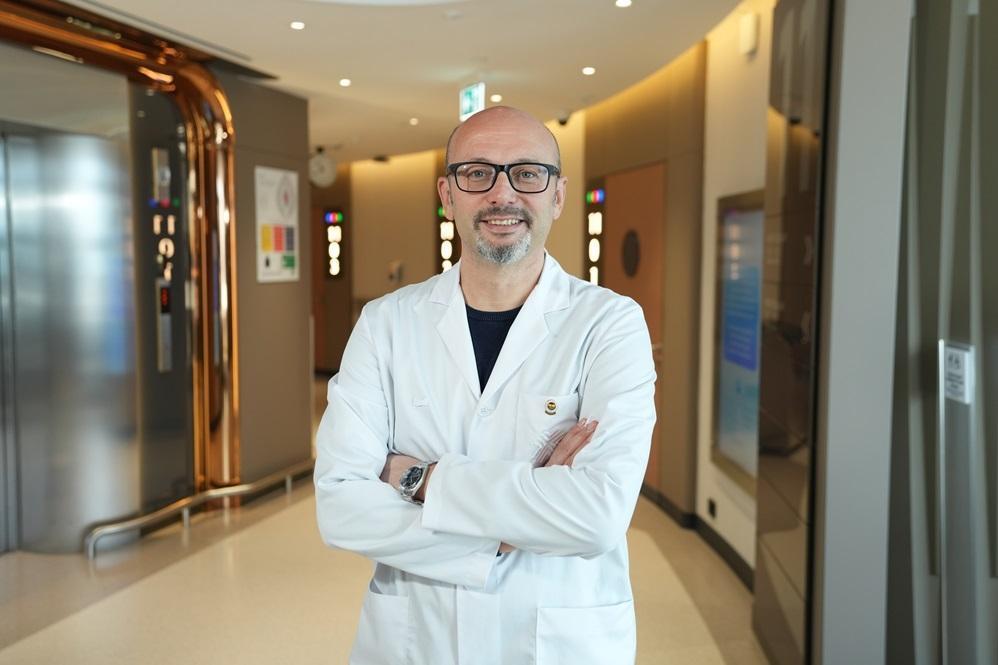
As the weather gets colder, respiratory infections become more common. RSV, which especially threatens babies during this period, can be severe in children whose immune system is not yet fully developed, while it can cause more serious conditions in babies born prematurely and with chronic lung or congenital heart disease. Medipol Acıbadem Regional Hospital Neonatal Specialist Assoc. Dr. Ahmet Öktem explained the symptoms, risk groups and treatment process of RSV.
'CLOSED SPACES INCREASE THE RISK OF INFECTION'
Assoc. Prof. stated that the time spent in closed spaces increases as the weather gets colder. Dr. Öktem stated that with the opening of schools, conditions that facilitate the spread of infections have been created. Assoc. Dr. Öktem said, "With the opening of schools, children and their families come together again in big cities. Especially children of kindergarten and primary school age may not always be able to take the necessary precautions to prevent the spread of infections. As the weather gets colder, spending more time in closed areas and increasing crowds make it easier for respiratory infections to spread." Assoc. Prof. Öktem said. Dr. Öktem said, "Closed and crowded environments should be ventilated frequently, newborn babies should be kept away from crowded environments. Babies should definitely be kept away from cigarette smoke, and breastfed babies should continue to be breastfed." Assoc. Dr. Öktem said that diseases that are mild in older children or adults can turn into serious conditions in babies.
Assoc. Dr. Öktem said, "Respiratory tract infections, which can be overcome with mild symptoms such as flu and cold in adults or older children, can cause more severe clinical conditions such as bronchiolitis and pneumonia in babies. The fact that the immune system of babies is not yet fully developed and the narrow structure of the respiratory tract is important in terms of infections progressing to the lower respiratory tract and creating obstruction in the airways. Before touching the baby, hands should be washed with soap and water for at least 20 seconds. Cough, He drew attention to the importance of the process by saying, "People who show signs of runny nose, sneezing or mild fever should avoid contact with babies."
EXPLAINED THE SYMPTOMS OF RSV
Assoc. Dr. Öktem stated that the disease may start with mild symptoms such as a runny nose, and may progress to respiratory distress in some babies.
Assoc. Dr. Öktem said, "In RSV infection, nasal congestion, runny nose, fever, cough and wheezing may occur. Feeding difficulties and respiratory distress may also occur in babies. In severe cases, respiratory arrest, that is, apnea, and bruising around the lips and fingertips may develop. Especially symptoms such as respiratory difficulty, bruising or respiratory arrest require urgent evaluation."
PREMATURE BABIES ARE AT MORE RISK
Some Assoc. Prof. stated that babies have a higher risk of severe RSV infection. Dr. Öktem said that especially babies born prematurely and with certain health problems should be followed closely.
Assoc. Dr. Öktem said, "Very premature babies, those with congenital heart disease and those with chronic lung disease are in the risk group for RSV. Babies who were treated in intensive care during the neonatal period and whose lung problems continue should be monitored especially carefully. Long-acting protective antibody treatments can be applied to reduce the risk of severe disease, especially in babies entering the first RSV season or in the risk group under 8 months."
SUPPORTIVE APPROACH IN RSV TREATMENT PRELIMINARY PLAN
Assoc. Prof. stated that RSV is a viral infection and therefore antibiotics are not effective against the virus itself. Dr. Öktem explained that the treatment is planned according to the clinical condition of the baby.
Assoc. Dr. Öktem said, "There is no specific antiviral treatment that is routinely used against RSV infection and directly eliminates the disease. In babies who need to be hospitalized, we primarily focus on supporting nutrition and fluid intake and relieving breathing. Oxygen therapy can be applied when necessary. Respirator support may be required in very severe cases. We try to provide treatment with methods that require less intervention as possible. Some inhaler treatments can be evaluated according to the clinical condition of the baby. Thanks to the RSV vaccine administered during pregnancy, the antibodies formed in the mother are transferred to the baby through the placenta." "To protect against RSV infection, basic hygiene rules should be followed, and pregnancy vaccines and protective antibody treatments should be evaluated for babies in the risk group," he said.
Source:DHA