
Work, money, relationships... These days, it is becoming increasingly difficult to predict what tomorrow will bring in almost every aspect. Psychologists say this constant feeling of uncertainty leads many people to make impulsive decisions. Fortunately, there is no need for complicated methods to calm anxiety; Sometimes even a handful of cold water splashed on the face helps.
Source: CNBC Make It
Uncertainty pushes people to hasty decisions

Suzan Song, a psychiatrist and writer working in Washington, explains that her clients have been making hasty decisions one after another lately. Some people expect a serious word immediately in a new relationship, while others resign without having anything else to do. Song and his colleagues also observe that some clients consult artificial intelligence to interpret a conversation or decide what to do, or even turn to fortune tellers and love spells to find a partner.
According to experts, the common point of these behaviors is uncertainty. According to the American Psychological Association (APA) 2026 stress report, more than two-thirds of adults in the US say they are used to living with uncertainty. The rate of those who think they have almost no control over their future increased from 23 percent to 28 percent in one year.
What has changed is not uncertainty, but the way we are exposed to it
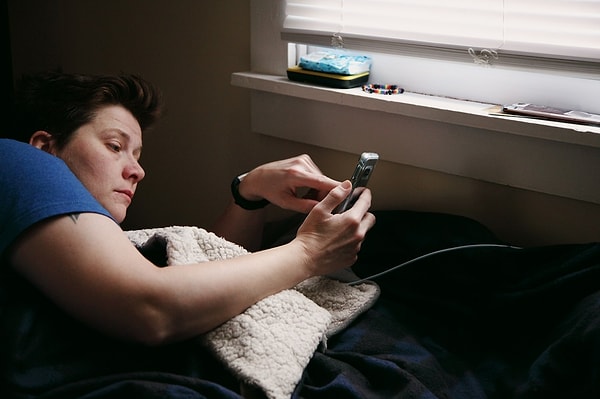
Experts underline that uncertainty is nothing new; It was always present, both in personal lives and in the world. What's different today is that almost every area, from work to money, from relationships to the future, seems blurry at the same time. Smartphones also increase this burden: While we deal with our own troubles all day long, we keep scrolling through bad news from around the world.
Psychologist Julie Pike, working in North Carolina, explains this with the Cold War example: In those years, people followed the developments in the newspaper, but they did not have the opportunity to watch short videos for hours and get into a spiral of anxiety. As daily troubles and the endless news flow overlap, stress and anxiety accumulate.
Finding instant answers to everything reduces our tolerance for uncertainty

According to Natalie Dattilo, a psychologist working in Indianapolis, having information at our fingertips may have weakened our ability to tolerate uncertainty. In the past, people had no choice but to stay alone with the unknown for a while and learn to live with it.
Today, artificial intelligence chat bots can even make a rough calculation of when we can reach some milestones in life. While this may calm the anxiety for a while, no program knows the future and uncertainty remains. So what to do when you feel like you're drowning in the unknown?
Splashing cold water on the face quickly calms anxiety

Andrew Tepper, a psychotherapist working in New York, suggests directing attention to the physical sensations in the body at such moments. His first tip is simple: splash cold water on the face.
According to Tepper, cold water activates the part of the nervous system that calms the body. This is one of the quickest ways he knows to relieve tension when anxiety suddenly escalates.
Stepping barefoot on the grass brings you into the present moment

Tepper's second suggestion is to take off your shoes and step on the grass. Some of his clients, including young people, have now made this a habit.
Feeling the soil, warmth and texture under the feet draws attention to the present moment. In Tepper's words, the place where uncertainty catches people hardest is the present moment.
Moving in nature cuts the spiral of anxiety

The third suggestion is also related to the body: go out and move. It doesn't matter if it's a short walk, a nature walk or a bike tour.
According to Tepper, when people are in nature and engaged in an activity that excites them, they have a hard time thinking about what will happen next year. So, when the scenarios in your mind start to grow, throwing yourself out can be a good start.
A single sentence you repeat to yourself may also help

Psychologist Natalie Dattilo recommends a support for the mind as well as the body: Regularly repeating a sentence such as 'No matter what happens, I'm sure I can deal with it.' It is possible to do this once a week, every day or as needed. Such sentences keep one's feet on the ground and help to restrain some of the anxiety.
Moreover, according to Dattilo, this sentence is not just a consolation, it is the truth: Whatever happens next, there is nothing to show that you cannot cope with it.


